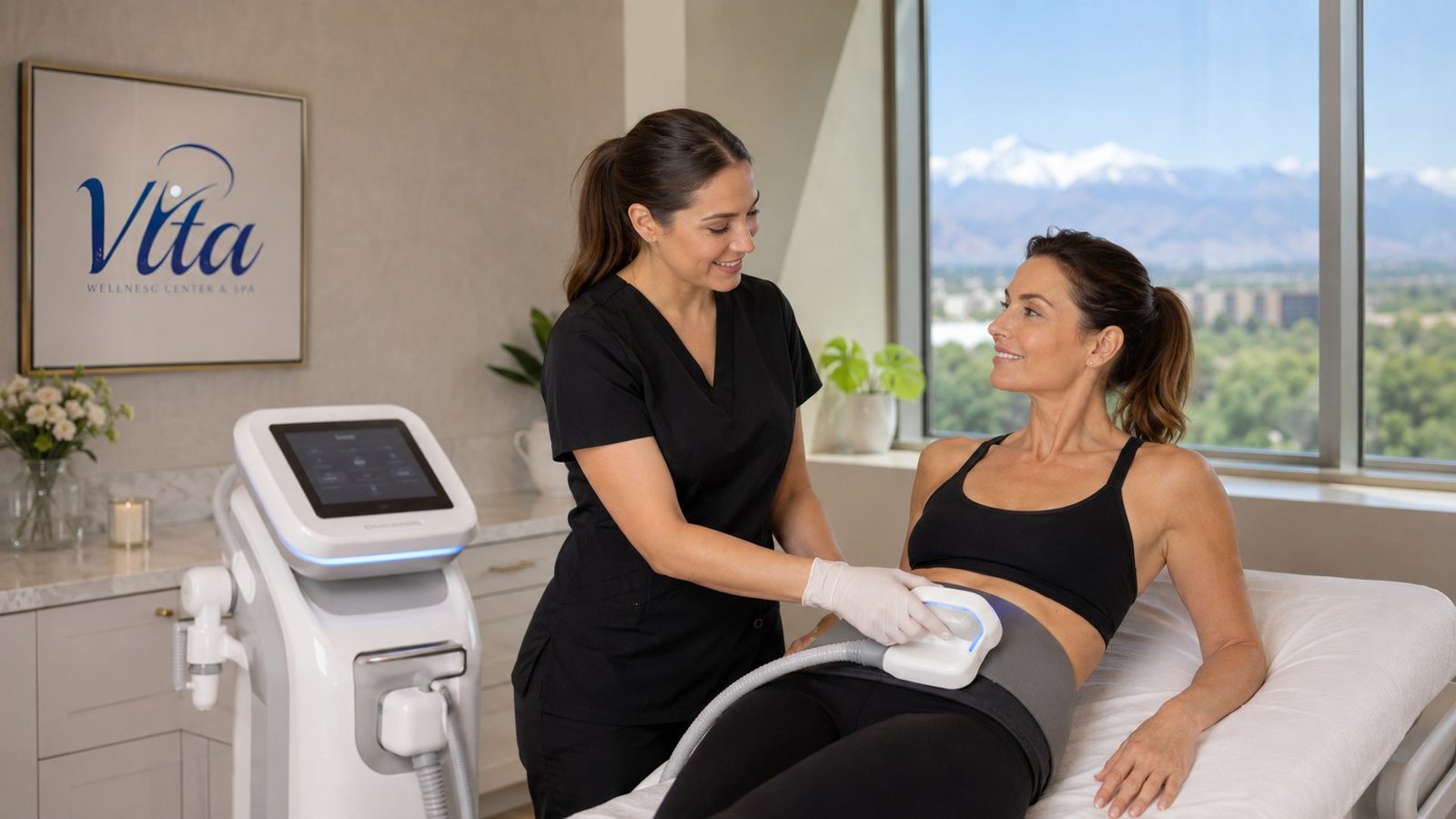


Belly fat that does not respond to diet and exercise after 40 is almost always connected to hormonal changes rather than discipline. Cortisol, insulin resistance, estrogen decline, and thyroid shifts all contribute to fat accumulation around the abdomen. A medically supervised program that addresses these drivers works differently from a standard diet.
In this post:
- How cortisol drives abdominal fat storage in the body
- Why insulin resistance and thyroid changes make diets fail
- What standard blood panels miss that matters for weight
- How a clinical program addresses these specific drivers
Most people who struggle with belly fat after 40 have already tried eating well and exercising consistently. For an overview of the broader biology behind why weight loss gets harder after 35, see the post on why you can’t lose weight after 35. This post goes deeper into the specific hormonal mechanisms behind belly fat.
Vita Wellness Center in Greenwood Village serves clients across the Denver metro dealing with exactly this pattern. Voted Best of 2025 for Weight Loss Service in Greenwood Village.
Cortisol Belly Fat: Why Stress Makes the Body Store Fat in the Abdomen
Cortisol is the body’s primary stress hormone. When cortisol stays elevated due to chronic stress, lack of sleep, or ongoing caloric restriction, the body receives a signal to store fat, concentrating around the visceral area deep around the organs in the abdomen.
Visceral fat tissue has a high concentration of cortisol receptors. When cortisol remains chronically elevated, those receptors stay active and fat accumulates in that area regardless of caloric intake. Cortisol also suppresses leptin, the satiety signal, and increases ghrelin, the hunger signal. The result is eating more, feeling less satisfied, and storing more of what is consumed as abdominal fat. That is a biochemical response, not a behavioral failure.
|
Hormone / Factor |
What Happens When Imbalanced |
Effect on Belly Fat |
|
Cortisol |
Rises with chronic stress, poor sleep, and caloric restriction |
Directs fat storage to the visceral and abdominal area. Suppresses satiety signals. |
|
Insulin resistance |
Develops with age and worsens with repeated dieting cycles |
Cells store more fat even at the same caloric intake. |
|
Estrogen (women) |
Declines through perimenopause and menopause |
Fat redistributes from hips and thighs to the abdomen. Metabolic rate slows. |
|
Testosterone (men and women) |
Declines from mid-30s onward |
Reduced muscle mass lowers resting metabolic rate. Fat accumulates more readily. |
|
Thyroid |
Can slow without crossing abnormal thresholds on basic panels |
Metabolism slows. Energy drops. Weight loss stalls even with reduced intake. |
Table 1: The five hormonal factors most commonly driving belly fat accumulation after 40.
Hormone Imbalance and Weight Gain: Why Standard Lab Work Misses the Problem
A standard annual blood panel checks cholesterol, blood glucose, and a basic thyroid TSH level. What it typically does not check includes free T3 and T4, reverse T3, cortisol levels, estradiol, progesterone, testosterone, fasting insulin, and inflammatory markers.
Most general practitioners work within a system designed to catch serious disease, not to optimize metabolic function. Insulin resistance develops over years before blood glucose crosses the diabetic threshold. Subclinical thyroid issues fall within normal TSH range while still slowing metabolism. These gaps are where most unexplained belly fat and weight gain originate.
Hormone Weight Gain After 40: What a Clinical Approach Looks Like
The medically supervised weight loss program at Vita Wellness starts with a consultation that reviews individual health history, symptoms, and goals. The program is personalized based on what is actually driving weight gain for that individual.
The semaglutide weight loss program addresses appetite regulation and insulin sensitivity using FDA-approved medication. The full Weight Loss Package is $1,500 or $375 per month over four months and includes semaglutide injections, bi-weekly Lipo Mino injections, the Balance D dietary supplement, physician oversight, nutrition counseling, and wellness coaching with daily messaging access and three online fitness sessions per week.
For clients whose primary driver is insulin resistance, the tirzepatide program at $499 per month for three months activates two hormonal pathways simultaneously. Labs and physician visit costs are not included. HSA, FSA, and CareCredit accepted.
Frequently Asked Questions
Q: Why does belly fat increase after 40 even without eating more?
A: Cortisol, estrogen decline, and insulin resistance all shift how the body distributes and stores fat. These changes direct fat toward the abdomen independent of caloric intake.
Q: Can cortisol cause weight gain without overeating?
A: Yes. Chronically elevated cortisol signals the body to store fat in the visceral area, suppresses the satiety hormone leptin, and increases the hunger hormone ghrelin. The result is fat storage driven by hormonal signaling, not caloric excess alone.
Q: Why does my doctor say my labs are normal when I still feel terrible?
A: Standard blood panels are designed to catch serious disease, not to identify subclinical hormonal imbalances. Free T3, T4, cortisol, fasting insulin, and inflammation markers are often not checked on routine panels.
Q: Does semaglutide help with insulin resistance?
A: Yes. Semaglutide is a GLP-1 receptor agonist that directly improves insulin sensitivity alongside reducing appetite. Tirzepatide, the dual GLP-1 and GIP option, addresses insulin resistance even more aggressively.
Q: How long before I see results from a medically supervised weight loss program?
A: Most clients notice appetite changes in the first one to two weeks. Visible weight changes typically compound from weeks three and four onward as dosage increases toward therapeutic range.
Ready to Take the Next Step?
Vita Wellness Center serves Greenwood Village, Centennial, Aurora, Highlands Ranch, Lone Tree, and the Denver metro. Open Tuesday through Saturday, 10am to 6pm.
Located at 9251 E. Peakview Ave., Unit D, Suite 7 inside Tiffany Salon Suites, Greenwood Village, CO 80111. Call 720-330-5999 or book at vagaro.com/vitawellnesscenter.
HSA, FSA, and CareCredit accepted for qualifying services.